Phone
980-384-7357
HOURS
Mon-Sun: 24/7 Available
SERVICE AREA
Charlotte, NC & SC
Kitchen exhaust systems are the primary line of defense against fire for commercial cooking operations. In North Carolina, fire marshals and insurance providers place a heavy emphasis on how these systems are maintained to ensure public safety and manage property risk.
Professional cleaning doesn’t just keep your kitchen smelling fresh—it is a mandatory requirement for staying compliant with state law and maintaining your insurance coverage.
Commercial kitchens in NC, from Charlotte’s busy bistros to Raleigh’s barbecue pits, produce significant amounts of grease-laden vapors. These vapors travel into the hood, through the ductwork, and out the exhaust fan. Over time, they condense into a highly flammable fuel source.
If a fire starts on the stovetop, a neglected exhaust system acts as a fuse, carrying the fire deep into the building’s structure. This is why “visible cleanliness” is only the beginning of what North Carolina inspectors look for.
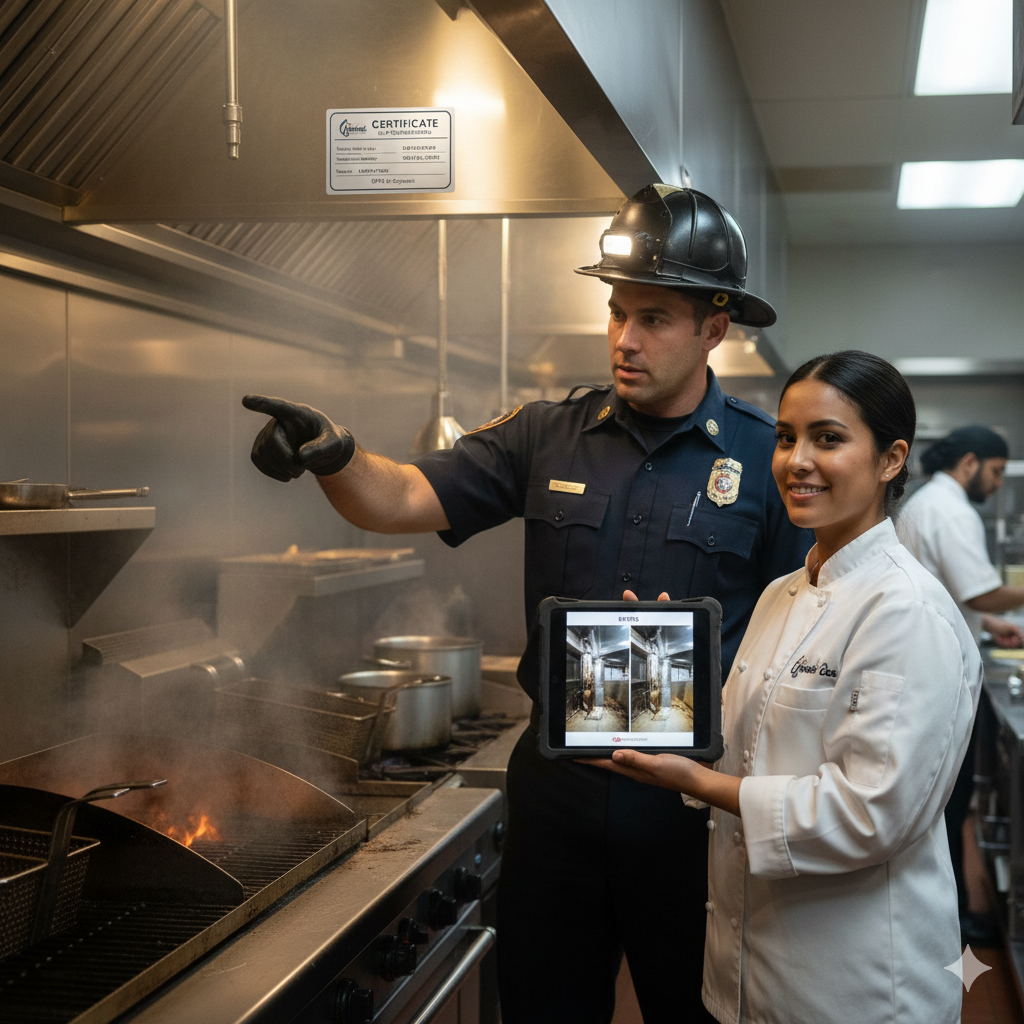
North Carolina enforces the NC Fire Prevention Code, which heavily incorporates NFPA 96 standards. During a routine inspection, an NC Fire Marshal isn’t just checking your fire extinguishers; they are looking for proof of professional exhaust maintenance.
Failure to meet these standards in North Carolina can lead to immediate “Notice of Violation” (NOV) filings, which can halt your operations until the system is brought up to code.
Insurance companies view commercial kitchens as high-risk environments. To manage this risk, almost every policy in North Carolina includes a “Maintenance Clause.” In the event of a fire, the first thing an insurance adjuster will ask for is your Kitchen Exhaust Cleaning (KEC) Service Report. * Claim Protection: If you cannot prove the system was cleaned according to the frequencies required by NFPA 96, your insurer may deny the claim based on “failure to maintain.”
Documentation is the “bridge” between the work performed and the approval you need from authorities. A professional service in North Carolina should provide you with:
In cities like Wilmington, Asheville, or Greensboro, the goal for restaurant owners should be to stay ahead of the inspection. Integrating scheduled exhaust cleaning into your safety plan ensures that you are always “inspection-ready.”
Consistent maintenance also reduces the mechanical strain on your exhaust fan motor. A grease-clogged fan has to work harder, leading to higher energy bills and premature equipment failure.
Fire inspections and insurance renewals shouldn’t be a source of stress. By partnering with a professional exhaust cleaning provider that understands North Carolina’s specific regulatory landscape, you protect your investment, your staff, and your customers.
Is your kitchen due for its next NFPA 96-compliant cleaning? Don’t wait for a violation notice.